Friday, October 5, 2012

Review - Phil Madeira - Off Kilter

This is one amazing album. Nearly every song is a homerun, or at least a triple. Out of print, though. Did I mention he used to play with Phil Keaggy and attended college at Taylor University, the Upland campus when they only had the Upland campus?

* * * * * If you saw Phil Madeira sitting alone in a café, a worn baseball cap on a head long abandoned by hair, a circle beard highlighting a face that has seen nearly fifty years of life, a sarcastic twinkle in his weathered eyes, you would find him quite approachable. Sit down and chat and you would find a very amiable, very normal "guy" making his way through life, enjoying sports and his family. Ask him about his job and you'll find that he is best "known" as a session Hammond B-3 Organ player in Nashville. He is also a co-writer of songs with many darlings of contemporary Christian music (including Amy Grant, Michael English and Michael Card), had a song included on the Touched By An Angel soundtrack and, oh yeah, one of his songs was recorded by Garth Brooks (well, his alter-ego Chris Gaines). Despite his activity in the Christian music scene, Off Kilter is not a Christian album. It is raw, dark and searching, full of the pain of life, not the pre-digested answers contained in much of the saccharine radio ditties of that genre. These songs are like the aching, unsettling part of you that only surfaces when things are very still, which is why we all stuff our lives so full of activities. But Madeira explores this hidden yearning, plumbing the depths of his own emptiness, not as someone who has all the answers as dictated by his church, but as a man in his late 40s, finding only more questions in the painful turns life throws you. While known for his B-3 work, this album is all guitar (played exceedingly well… didn't I mention that aside from drums he plays all the instruments?) matched with Madeira's naked and vulnerable tenor voice that at all times sounds like it's about to crack from the weight of the emotion it carries. The style is a kind of Americana, a blend of rock, pop, country, and blues that tends to fall into a stylistic no-man's land. While almost all of the twelve songs hit some kind of nerve with me, far and away the most resounding is "Jagged Heart". Here Madeira takes a hard look at his life with a chorus of "I've been carving/ Stripping back the bark / Rounding off the edges/ Of a jagged heart." Of course, it's the heart-rending melody that brings life to these lyrics and once again, words fail to capture such magic. Again and again, these solid songs supported by solid musicianship strike deep, hitting the hidden, longing part of you that can't be revealed to even your closest friend, and yet Phil bares his soul as only a master songwriter can, bringing the comfort of companionship to others in the midst of his own pain.

This review first appeared in WhatzUp, November 2001.

Review - Phil Madeira - 3 Horse Shoes

I saw Phil Madeira on tour with Terry Taylor and attended a writing workshop. Good stuff, there! I'm raking in the millions now! Plus I discovered an amazing songwriter.

* * * * *

It's always interesting when a studio musician creates a solo album, giving them a chance to showcase songs they have written instead of creating parts for the music of others. Phil Madeira is not a name you would recognize, or even know how to pronounce, but I guarantee you've heard this legendary Hammond B-3 player as he's plied his trade all over Nashville. One would suspect that this album would be drenched in the great B-3 but instead the listener is treated with lots of gentle guitar songs with many guest musicians. The entire album was inspired and actually written in 3 Horseshoes, a small pub in England, coaxed out by endless pints of British ale and the regulars who took him in as one of their own. At the time the album was written, Madeira was coming off a long concert tour and was spent, empty and exhausted. Under the caring fellowship of his newfound pub cronies, this collection of songs sing of coming out of a dark night of the soul, exploring life as just a regular guy hoping to live a meaningful life.

The music is more upbeat and looser than his previous solo album. Stylistically I am reminded of The Call mixed with Dylan and Van Morrison. Madeira's husky voice wraps around these thoughtful lyrics and sends them meaningfully into the ear of the listener. Songs like "Mysterious Ways" are typical of the hope Madeira found at this pub: "Here in the Midlands I found my spirit under a cloud in a field of green / I can't explain it, somebody woke me / I opened up my eyes and I walked into a dream." Expect to hear the unexpected: lots of acoustic guitars, fiddles, mandolins, exotic percussion, pedal steel and cellos adorn these gentle gems. Expect the unexpected... expect to find yourself in a small pub thousands of miles from home. Perhaps this is the theme of the album, this album of songs that grow on me with each listen, songs that grow deep and seem to sink into my bones and my soul.

This review first appeared in WhatzUp, September 2000.

Review - The Straw Theory

Another one that doesn't get any spin these days. It was just "okay."

When you center any band around a piano, comparisons to Ben Folds Five are inevitable. Fearing a mere rip-off band, I started the self-titled CD by The Straw Theory spinning and sat back without much expectation. And so it was that the first song tore past my ears with a runaway train tempo and blazing guitars. The piano was at the center of the song but more like a skeletal structure upon which the copious guitars would hang than an ebony and ivory skin that makes itself the auditory focus. Ben who? The album continued with song after song of solidly written songs of innocence and youth with poetic, thought provoking lyrics backed by catchy, intricately arranged melodies. "Joker's Wilde", with its excellent juxtaposition of a breezy, laid-back verse with an aggressive, angular chorus is the perfect foil to the dreamy "Man On The Moon", a song singer/songwriter Tyler Houston shares with Leigh Nash of Sixpence None the Richer and her ethereal vocals. Which is a good thing because the only weakness of this album is Houston's vocals. He handles the faster songs well but he tends to drone on in some of the slow songs, causing me great annoyance and ultimately, a quick punch of the fast-forward button. "Falling Forward" finds the band at their peak with a solid upbeat alternative radio song. Here the bass player plays sustained notes other than the chord root, creating some nice tensions in the verse that resolve in the chorus. And I would be amiss if I did not mention that "In The Future" may cause your speakers to blister and melt. All in all, an excellent first album that I would recommend to those who like their alternative rock fresh and innovative, but still rock.

This review first appeared in WhatzUp, February 2000.

Review - Lost Dogs - Real Men Cry

Lately I have really enjoyed their albums but in this period right after Gene died and they were refinding the mojo they had just found. 1992, eh? That couldn't have been all that long ago.

* * * * * Lost Dogs was formed when the leading members of four pioneering yet obscure alternative bands got together to rediscover the roots of rock and roll, resulting in 1992's Scenic Routes, a hodgepodge of musical styles running from country to gospel to blues to rock to alternative. Three more albums brings us to the release of last years Gift Horse and the passing away of member Gene Eugene, leaving many to wonder if he would be replaced, who would replace him, who could replace him, or if The Lost Dogs would even continue. Legally binding record contracts being what they are, The Lost Dogs have continued, sans replacement.

Being this is their first album as a three-piece (plus the usual ragtag of rhythm section players), it's somewhat fitting that album is quite reminiscent of the Merle Haggard-Johnny Cash feel of the very first Lost Dogs album. While Gift Horse unabashedly country with twang, this one runs the stylistic gamut, although not as much as their 1996 release Green Room Serenade. One of the joys in having four, er, three strong song writers in a group is each member has their turn at bat but as in last years release, Terry Taylor wrote nearly every song, resulting in a more uniform tone but one that is not as nearly as adventurous or as fun as it could be. Still, they take turns on vocals and guitars, including the copious vocal harmonies. Even for one such as myself who abhors the twangy end of country music, there are lots of well-written gems that are sure to be ignored by the general public. Mike Roe croons the effective ballad of a title track in a gentle tenor voice and later does his best Gene Eugene impersonation on the touching "In The Distance". "The Legged Dog" is a rollicking, humorous song about a dog (band?) that has "a few miles left." "Dust on the Bible" is appropriately of the gospel genre while "Certain Love" is an upbeat alternative country song spouting lyrics such as "I had a dream but it fell apart/ A trusted friend who broke my heart." True to form, the songs are sweet and sad, describing losses, loneliness and regret but always with a flicker of hope. While not my favorite Lost Dogs album, there is a definite charm and earnestness to these "sung from the heart" songs, a joy in being alive despite life's hardships and pains that makes this album a keeper.

This review first appeared in WhatzUp, October 2001.

Review - The Lost Dogs - Gift Horse

Oh, how I miss new music from Gene Eugene...

* * * * *

Take four alternative music pioneers (Terry Taylor of Daniel Amos, Derri Daugherty of The Choir, Gene Eugene of Adam Again, and Mike Roe of 77s), throw them into a studio for a few weeks, shake gently, and out comes... a country album? Originally a side project, the Lost Dogs have released their fourth studio album, Gift Horse. While the intent of these albums has always been to hearken back to their musical roots, never has a Lost Dogs album been so country and western. Previous releases included 50s rock, bluegrass, alternative ballads, and even a novelty song but this album is unabashedly grounded in country. As always, the songs tell tales, such as "A Vegas Story" about a gambling addict selling his life for "free drinks and a dream" while "Rebecca Go Home" is a touching, sad song about innocence lost. "Diamonds to Coal" is a straight-ahead rocker while "If You Loved Here..." is an all-out hick hootenanny! "Loved and Forgiven" breaks from the general feel slightly with more of a Beach Boys/ 77's vibe in the chorus but overall, the album is much more cohesive in content and feel than previous albums.

Which is the main problem with this album. Yes, the songwriting is solid and yes, the vocal harmonies are amazing but while in past albums each "dog" brought a number of songs to the table, on this album Taylor wrote all the songs. All of them good songs, mind you, but it is the unique chemistry between these four fantastic artists that has been the real draw of Lost Dogs. Plus it's about the only time you get to hear one or two new songs from Gene Eugene, one of the best songwriters alive, since Adam Again has been on hiatus for the last half-decade... and this time there were no songs by Eugene. So yes, the songs are excellent, winning over even such an anti-country music people as myself and my brothers, but Lost Dogs raised the bar so high on previously albums that Gift Horse is more like a well groomed show pony than the Kentucky Derby winner fans have come to expect.

This review first appeared in WhatzUp, March 2000.

Review - Starflyer 59 - Leave Here A Stranger

I really like this album but it depresses me and needs to be listened to in one gulp so it doesn't get much time these days.

* * * * *

Some albums are great albums, full of wonderful songs. Some albums reek to high heavens. A very select few albums are works of art. Although it may sound pretentious, Leave Here A Stranger by Starflyer59 is definitely in the latter category. From the very first spin, something about the flow, the cohesiveness of the songs and how they interact with each other makes you realize that SF59 had high aspirations for this album and that they hit their mark perfectly. While listening to this disc I am reminded at times of the landmark OK Computer, early The Cure, and Pet Sounds, lofty sources of inspiration indeed. In a conscious effort to strip down their sound, SF59 recorded the album in glorious mono, forcing themselves to distill their vision into a potent concentrate. Much like Pet Sounds, there is an amazing breadth of instrumentation including harps, saxophones, strings, timpani and more. The fact that such lush orchestrations do not cloud the songs is a tribute to all involved. As with past SF59 efforts, there is a great bit of creative use of noise and heavily reverbed guitar alongside Jason Martin's trademark wispy vocals not unlike those of Radiohead's Thom York. The songs are low-key and atmospheric yet filled with haunting melodies and arrangements. For lyrical inspiration, the band looked to their immediate world. The opening track, "All My Friends Who Play Guitar" cascades a wash of sound like the waves on a beach as Martin sings about a life spent on the road. The chorus of "Can You Play Drums?" has Martin lamenting that "I already know what we're gonna play" and in "Things Like This Help Me" he "stays up late [to] fix all the sounds." For this musical brew, all influences are fair game including The Smiths ("Give Up the War") and Roy Orbison ("Night Music"), although like the best cooks, the ingredients are combined to create a completely new dish with only hints of the original sources. My personal favorite is "I Like Your Photographs", a mesmerizing epic of a song whose topic still eludes me. The six minutes of this song are a well-written novel with chapters that flow effortlessly into each other. This beautifully lonely indie-pop masterpiece will appeal to fans of Radiohead, Belle & Sebastian, and The Smiths and is sure to send shivers of delight down your wicked spine.

This review first appeared in WhatzUp, August 2001.

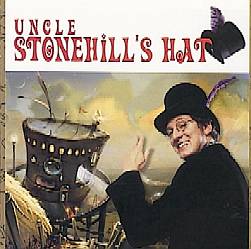
Review - Randy Stonehill - Uncle Stonehill's Hat

With limit exception, Mr. Stonehill's music isn't my thing. Which is odd because one would think it would. Wood. But when it hits it hits strong. This one fails to cut the cake. Maybe I should drag it out for my kids.

* * * * * Randy Stonehill has long been known in certain circles as an enigmatic and humorous entertainer. On Uncle Stonehill's Hat, his first children's album, ol' Randy has found a creative outlet for his many stage personas.

The album itself is a narrated adventure of two snobby, rude children who visit their Uncle Stonehill (a somewhat corny Willy Wonka-ish character whose house looks like a hat) and through many adventures come to appreciate imagination and the many fine aspects of politeness. The songs themselves are quite catchy and while suited more for children do have some adiult-appeal. The dialogue, however, is often corny with exclamations such as "Earthquakes and hotcakes!" and lots and lots of puns, the overall effect of which is to limit the repeat factor for at least this "adult". Stonehill populates the adventure with many characters and voices them all, with the majority of voices unfortunately identifiable as Stonehill just doing a silly voice. Still, with fourteen songs taking up most of the album (34 of the 53 minutes) one can always program out the dialogue and enjoy the music.

Some of the better songs are "Curious", an acoustic guitar folk-pop song that encourages curiosity and sets the tone for the rest of the album and "Mouse In My House", a very simple but very catchy song about a pet mouse named "Kitty." An amazing breadth of styles ensures that even ADD children will not become bored. There's alpine ("Switzerland"), Caribbean ("Shut De Do'"), fifties rock ("Mister Snail" sung by Snailvis) and medieval minstrel ("Beans and Franks"). One of the best is the sea-chantey "Stormy Winds", a rollicking pirate song full of accordions and sung by the members of the Good Ship Tuna Melt and the Admiral Pants Daily On. Closing the album is "Valley of the Echoes", a gentle, magical lullaby reminiscent of songs from Stonehill's timeless and much more consistent Wonderama album.

Overall I'm torn. There are some very good songs and there are some very bad puns. While there is some adult appeal, most of the album leans toward the pedantic, which makes up about 98% of children's albums on the market. My own kids (Joshua, 7, and Matthew, 3) weren't grabbed on the first listen but I did catch one of them singing the "Mouse in the House" song later that day. You can get a good impression of the album contents by visiting www.unclestonehill.com and snooping around a bit.

This review first appeared in WhatzUp, May 2002.